
What is a portfolio?
A portfolio is the central working unit in Nexoya: a group of campaigns from different channels that you monitor together. Instead of looking at Google Ads, Meta, and TikTok separately, you group their campaigns into one portfolio and get a single cross-channel view of performance, funnel, and budget. On Nexoya Premium, the portfolio is also the unit of optimization: every week, the AI predicts performance and shifts budget freely across all campaigns in it.
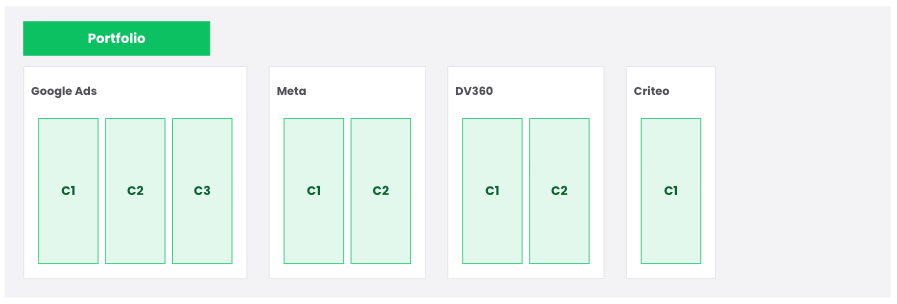
Every portfolio consists of three building blocks:
Contents: The campaigns and ad-sets from your connected channels that belong to the portfolio. They are detected and added automatically via content rules, so new campaigns join without manual work. See Mapping campaigns.
A funnel: Three to five steps that describe your customer journey, for example Impressions, Clicks, Sessions, and Conversions. Each step is fed by a metric from your connected channels or analytics. The last step is your portfolio target: the KPI that matters most, such as conversions, leads, or revenue.
A budget: The planned budget for the portfolio’s duration, defined through budget items and tracked against actual spend in the Budget tab. See Managing your budget.
Portfolio types
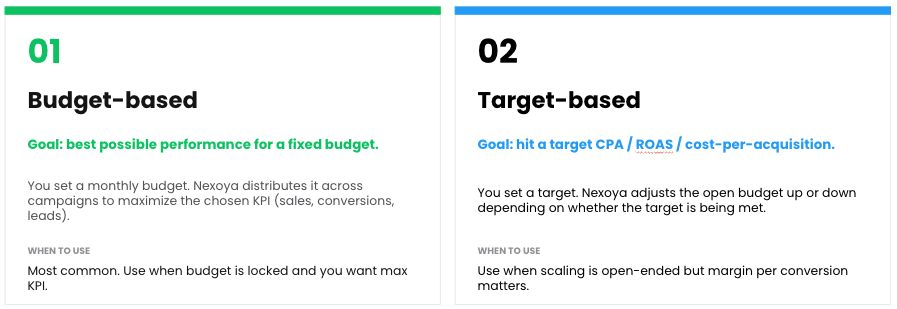
There are two portfolio types available in Nexoya. Budget-based portfolios aim for the best possible performance from a fixed budget, and this is the standard choice in Nexoya Starter. Target-based portfolios work toward a target CPA or ROAS with a flexible budget; they become relevant on Nexoya Premium, where the AI actively adjusts spend to hit the target.
How many portfolios do you need?
Usually one portfolio per business goal. Campaigns that share the same goal and the same target KPI belong in the same portfolio, even across channels. Campaigns with fundamentally different goals, for example lead generation versus e-commerce sales, belong in separate portfolios, since each portfolio has exactly one target.
Next step: Creating a portfolio.
Can’t find the answer to your question?
No problem, you can submit your question to us here.
Contact